

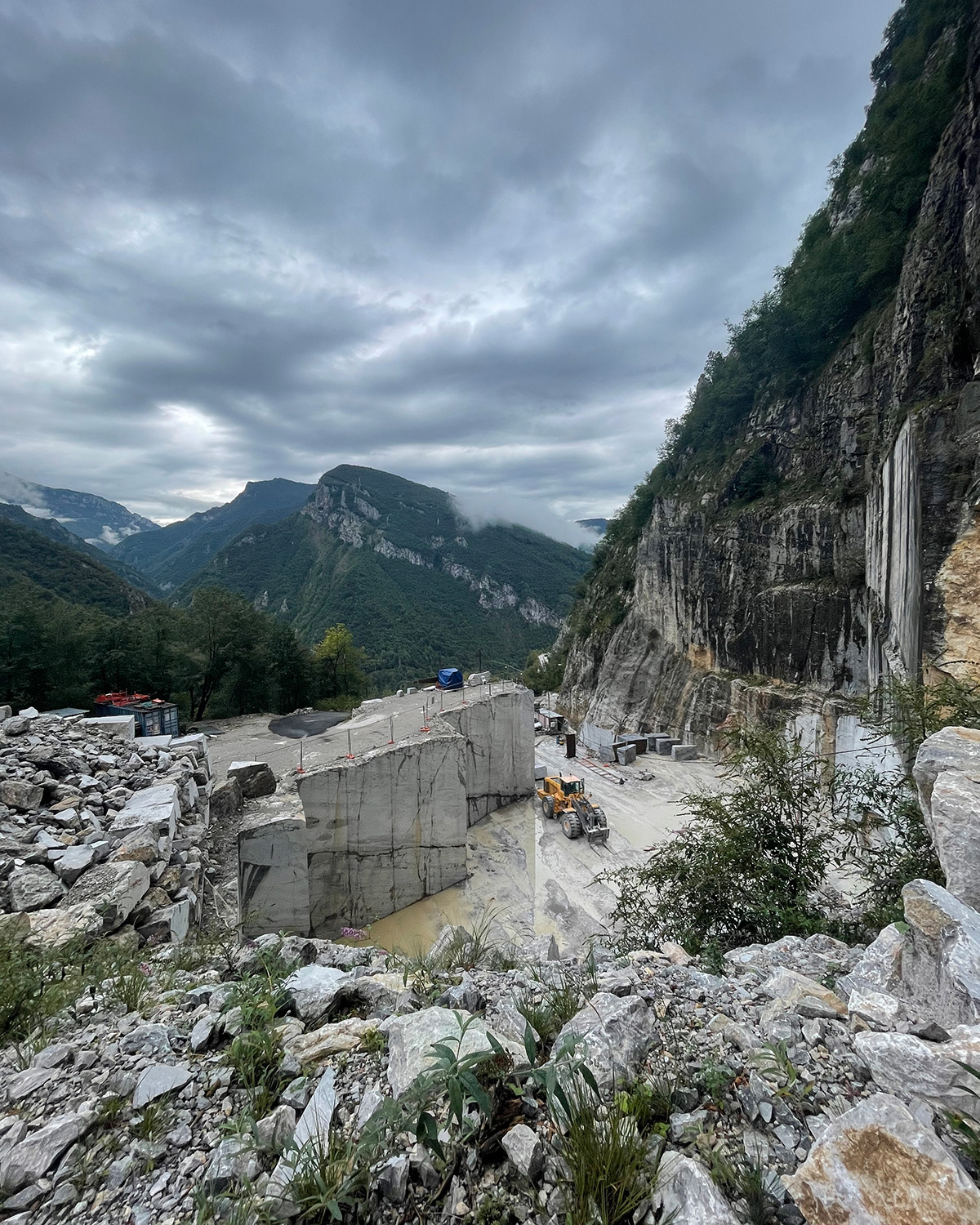
In the picturesque setting of the Brembana Valley, among the woods and rock formations of the Orobie Alps in the province of Bergamo, lies the quarry that produces the Arabescato Orobico marble, the most iconic quarry of Marmi Orobici Graniti.
The history of the quarry began in 1967, when quarrying began in the quarry called “Valsecca,” acquired at the time by Giuseppe Carnevale and Lucia Valli Carnevale, founders of Marmi Orobici Graniti. In order to expand production and meet growing demand, in 1975 a second quarry, Cornalita, was acquired, located at a lower altitude than Valsecca.
The area in which the quarry operates is characterized by a very complex alpine morphology: wooded slopes, rocky outcrops, and extraction areas that open up between the stratifications of the mountain. From a geological point of view, Arabescato Orobico marble belongs to the Upper Ladinian Red Limestone formation, dating back approximately 225 million years.
These marine sediments, originally deposited in shallow basins, underwent emersion, fracturing, dolomitization, and karstification. It is precisely these processes that have created the elegant veins and colour contrasts of this marble, which is unique in the world.
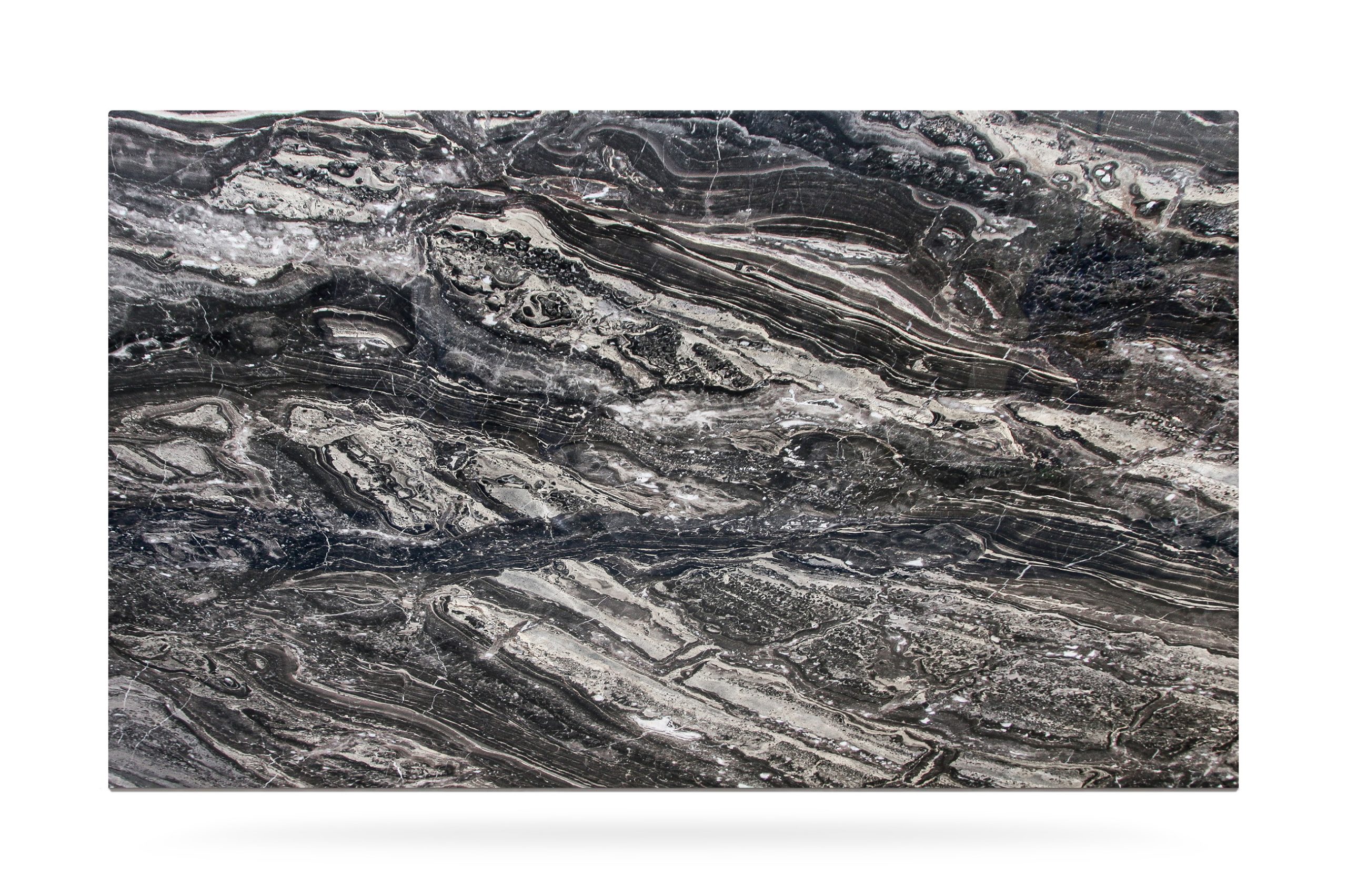
Arabescato Orobico is an elegant marble, available in shades ranging from deep grey to reddish tones, crossed by sinuous veins of white, grey, and gold whose patterns recall the arabesque motifs of Islamic art — hence the name.
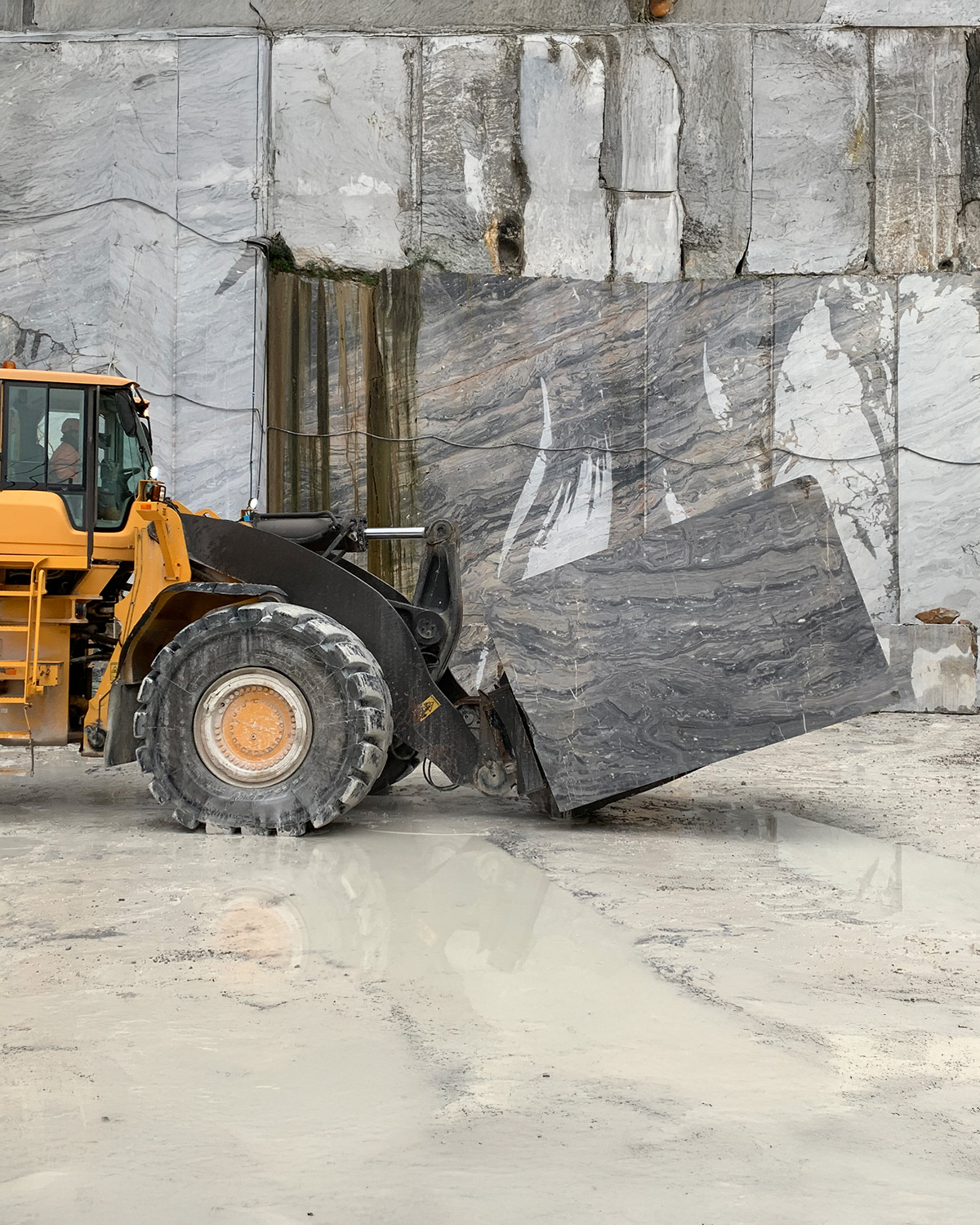
Each block extracted from the quarry is unique—even when multiple blocks are taken from the same face, the slabs are highly distinctive and unrepeatable. This makes Arabescato Orobico not only a functional stone but a true design element, a fragment of the Earth’s geological history transformed into architecture.
The Marmi Orobici Graniti quarry is the emblem of the fusion between natural beauty, ancient geology, and Alpine quarrying tradition: a journey from the depths of the Jurassic sea to the flooring or cladding of the most refined contemporary architecture.
In the picturesque setting of the Brembana Valley, among the woods and rock formations of the Orobie Alps in the province of Bergamo, lies the quarry that produces the Arabescato Orobico marble, the most iconic quarry of Marmi Orobici Graniti.
The history of the quarry began in 1967, when quarrying began in the quarry called “Valsecca,” acquired at the time by Giuseppe Carnevale and Lucia Valli Carnevale, founders of Marmi Orobici Graniti. In order to expand production and meet growing demand, in 1975 a second quarry, Cornalita, was acquired, located at a lower altitude than Valsecca.
The area in which the quarry operates is characterized by a very complex alpine morphology: wooded slopes, rocky outcrops, and extraction areas that open up between the stratifications of the mountain. From a geological point of view, Arabescato Orobico marble belongs to the Upper Ladinian Red Limestone formation, dating back approximately 225 million years.
These marine sediments, originally deposited in shallow basins, underwent emersion, fracturing, dolomitization, and karstification. It is precisely these processes that have created the elegant veins and colour contrasts of this marble, which is unique in the world.
Arabescato Orobico is an elegant marble, available in shades ranging from deep grey to reddish tones, crossed by sinuous veins of white, grey, and gold whose patterns recall the arabesque motifs of Islamic art — hence the name.
Each block extracted from the quarry is unique—even when multiple blocks are taken from the same face, the slabs are highly distinctive and unrepeatable. This makes Arabescato Orobico not only a functional stone but a true design element, a fragment of the Earth's geological history transformed into architecture.
The Marmi Orobici Graniti quarry is the emblem of the fusion between natural beauty, ancient geology, and Alpine quarrying tradition: a journey from the depths of the Jurassic sea to the flooring or cladding of the most refined contemporary architecture.